
What happens to the roof of a pickup truck in a rollover?

A few weeks ago, a Toyota Hilux pickup truck belonging to a mining fleet in South Africa rolled over during a shift. The vehicle was a total loss. The driver returned to work the next day, uninjured. Both things are true at the same time, and understanding why is probably the most important thing a fleet manager or supervisor can know about rollovers.
What happens to the roof of a pickup truck in a rollover?
When someone sees photos of a rollover, the first thing they notice is the shattered windshield and the deformed sheet metal. It's a natural reaction: the vehicle looks devastated, and that devastation seems to be the measure of the damage. It isn't. The laminated glass of the windshield is designed to flex. The same applies to dents in the doors, a bent hood, or ripped-off mirrors. These are material damages, and the vehicle is replaceable. The only question that matters in a rollover is another: Did the roof collapse over the driver's head? That's what determines whether the rollover was a costly incident or a fatality.
What really goes wrong in a rollover
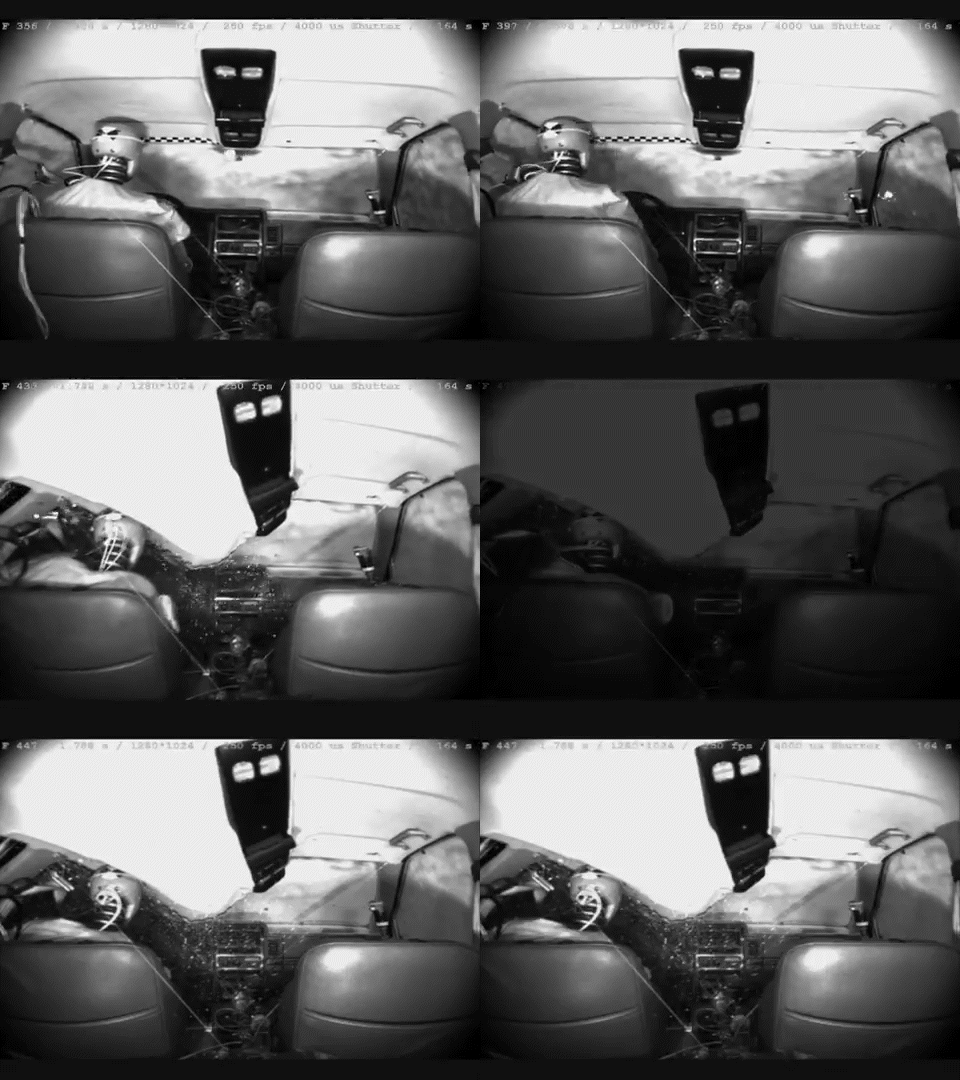
A double-cab pickup truck has a high center of gravity, and this problem worsens when it's loaded or traveling on dirt roads, mine roads, or uneven surfaces. This is one of the reasons why rollovers remain a leading cause of work-related fatalities in vehicles worldwide. When a pickup truck without a rollover protection system rolls, the sequence is predictable:
The vehicle impacts the ground on a corner of the roof, not the entire surface. All the energy is concentrated at a single point.
That point of impact collapses inward because the roof of a production vehicle is not designed to support the vehicle's weight in motion.
The B-pillar—the vertical pillar between the front and rear doors—buckles.
The roof structure is crushed downward and inward, reducing the interior space of the cabin.
That interior space has a technical name: survival space. It's the volume that must remain clear around the occupant to prevent them from being crushed. When the survival space disappears, the seatbelt ceases to be a protection and becomes a problem.

What do the photos of this rollover show?
In the images of this unit, after it was removed from the site, the windshield is gone. The side panel is scraped and deformed. The vehicle is a total loss and will never operate again. Now look at the door frame. It's still a rectangle. The B-pillar is vertical. The roofline didn't dip. That intact geometry is the reason the operator walked out. It wasn't luck, a favorable angle of impact, or a minor collision. It was the result of the structure doing its job while the body was sacrificed. A vehicle that is destroyed but retains its cab is not a system failure. It's exactly the expected outcome.
How a HALO rollover protection system works
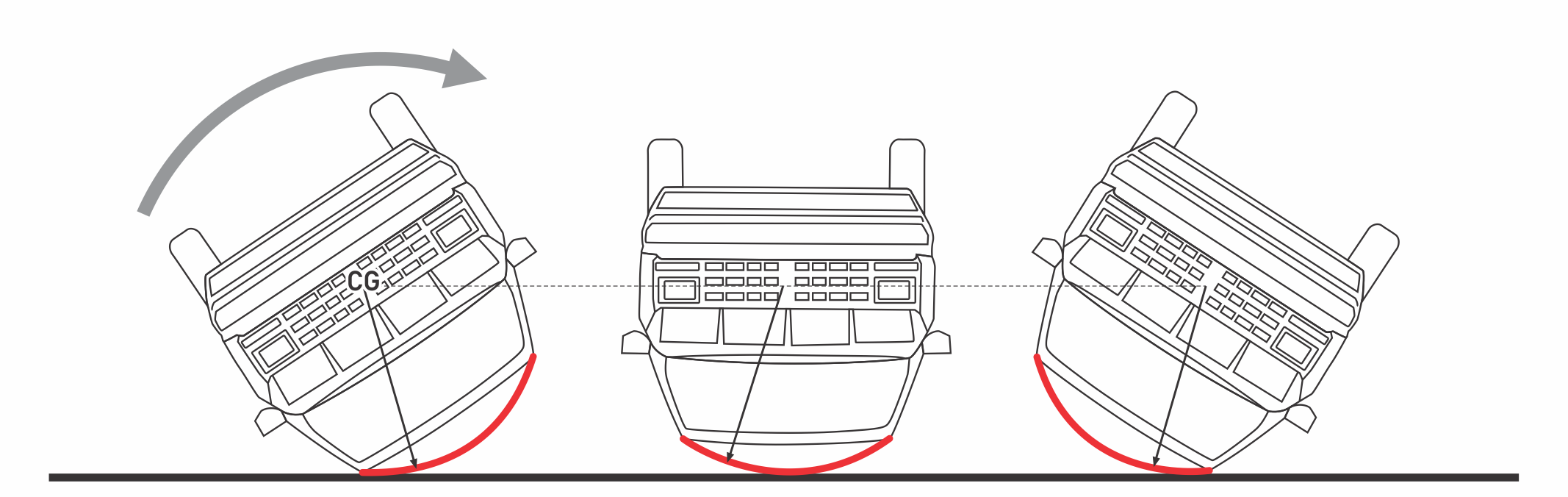
HALO stands for High Attenuation Load Offset. The name describes the operating principle. The system consists of two elements that work together:
An external tubular structure mounted on the roof, similar in appearance to a roof rack. Its function is not merely cosmetic: it maintains the vehicle's turning radius during a rollover, allowing it to roll more smoothly instead of getting caught and stopping abruptly. This reduces the forces experienced by the occupants.
Internal reinforcements in the pillars, installed within the vehicle's original plastic cladding. They are not visible from inside the cabin and do not interfere with side airbags, curtain airbags, or seat belts.
By connecting all the vehicle's vertical pillars and distributing the load across the entire roof structure, the system prevents force from concentrating at a single point. Instead of one corner absorbing the entire impact and collapsing, the load is spread out.
Two features that fleet managers often ask about:
Weight: between 50 and 60 kilograms, which does not significantly affect the center of gravity or fuel efficiency.
Installation: It fits specific models—Toyota Hilux and Land Cruiser, Ford Ranger, Nissan, Isuzu, Mitsubishi, Mercedes-Benz Sprinter, among others—without modifying the vehicle's original structure.
Certification: Why it matters
Anyone can weld pipe onto a roof. What distinguishes a certified rollover protection system from an improvised structure is that there is documented evidence of its performance under standard. HALO systems are evaluated under two standards:
ISO 3471:2008 — An international standard that establishes performance requirements for rollover protection structures, including verification that survival space is maintained under load.
FMVSS 216 — A U.S. federal standard that measures roof crush resistance, expressed as strength-to-weight ratio (SWR). The standard requires that the roof support a multiple of the vehicle's weight without intruding into the occupant's space.
This documentation is not a mere formality. It is the tool with which a safety manager justifies the investment to their purchasing department and demonstrates compliance during client or mine audits.
Three questions for your fleet
If you operate light vehicles in mining, construction, energy, agriculture, or off-road logistics, it's worth answering this honestly:
Do you know what happens to the roof of your vehicles in a rollover, or are you just making assumptions? If you've never tested it against a standard, it's an assumption.
Is your current rollover protection certified under a recognized standard? A locally manufactured structure without documented testing may give you confidence but not provide protection.
Which vehicles in your fleet are most exposed? Loaded vehicles, mine roads, night shifts, and long stretches of unpaved road concentrate the risk.
Rollovers are, in the vast majority of cases, survivable—if the cab holds up.
That's the whole difference between a vehicle written off and a call no one wants to make.
Want to know what options are available for your fleet?
Email us at info@safetyei.com or contact us via WhatsApp at +1 805-895-5192 . We can review your fleet models and share the complete technical documentation with you.


Comments