
The Isuzu D-MAX Is Built for Work. Its Roof Isn't.

In July 2026, Isuzu announced its entry into the Mexican pickup market with the D-MAX, imported from Thailand and with prices starting at $550,000 pesos. The brand was explicit in its positioning: it's not selling a lifestyle vehicle. It's selling a work truck.
For fleet managers in the mining, energy, construction, and field services sectors, this positioning has a direct consequence. These units will operate on dirt roads, mine ramps, pipeline rights-of-way, and solar farms—in other words, in the environments where rollovers occur. And there's a rule that doesn't change regardless of the make, model year, or purchase price.
Why a stock pickup truck roof doesn't protect in a rollover
The roof of a factory-built pickup truck is designed for limited structural functions. It is not designed to support the full weight of the vehicle resting on it. When a pickup truck runs off the road and spins, the sequence is as follows:
The vehicle loses contact with the ground and rotates on its longitudinal axis.
It lands on the corner of the roof, not on the flat roof. Almost no rollover is a clean landing.
The entire mass of the vehicle—plus the cargo in the bed, plus the occupants—is transferred through the A and B pillars.
These pillars, which are thin sheet metal profiles, buckle inward toward the cab.
The occupant's survival space shrinks in fractions of a second.
This last point is the important one. What determines whether the operator survives is how much the door frame deformed and how much distance remained between the collapsed awning and the occupant's head.
The roof crushing issue is not resolved from the factory.

There's a widespread belief that a new pickup truck is safer in a rollover than an eight-year-old one. In frontal and side impacts, this is generally true. In roof crush, however, the difference is much smaller than commonly assumed.
Roof strength standards for light vehicles establish a minimum static load threshold. This threshold is calculated for a baseline scenario, not for a rollover at off-road speed with a load in the bed, loose tools, and roof-mounted accessories. A mining fleet vehicle almost always operates above this baseline scenario.
To put it simply: buying a new vehicle reduces the risk of having an accident. It doesn't significantly reduce the severity of a roof rollover.
Specifying the source costs less than retrofitting.
When a rollover protection system (ROPS) is specified in the purchase order, it's included in the unit's investment budget, installed before the vehicle enters operation, and doesn't cause downtime.
When it's specified later—usually after an incident or a mining client's audit—it involves taking units out of service, transporting them to the equipment workshop, and absorbing the cost as an unbudgeted expense. The technical cost is the same. The total cost is not.
HALO ROPS: Certified rollover protection for work trucks like the Isuzu D-MAX
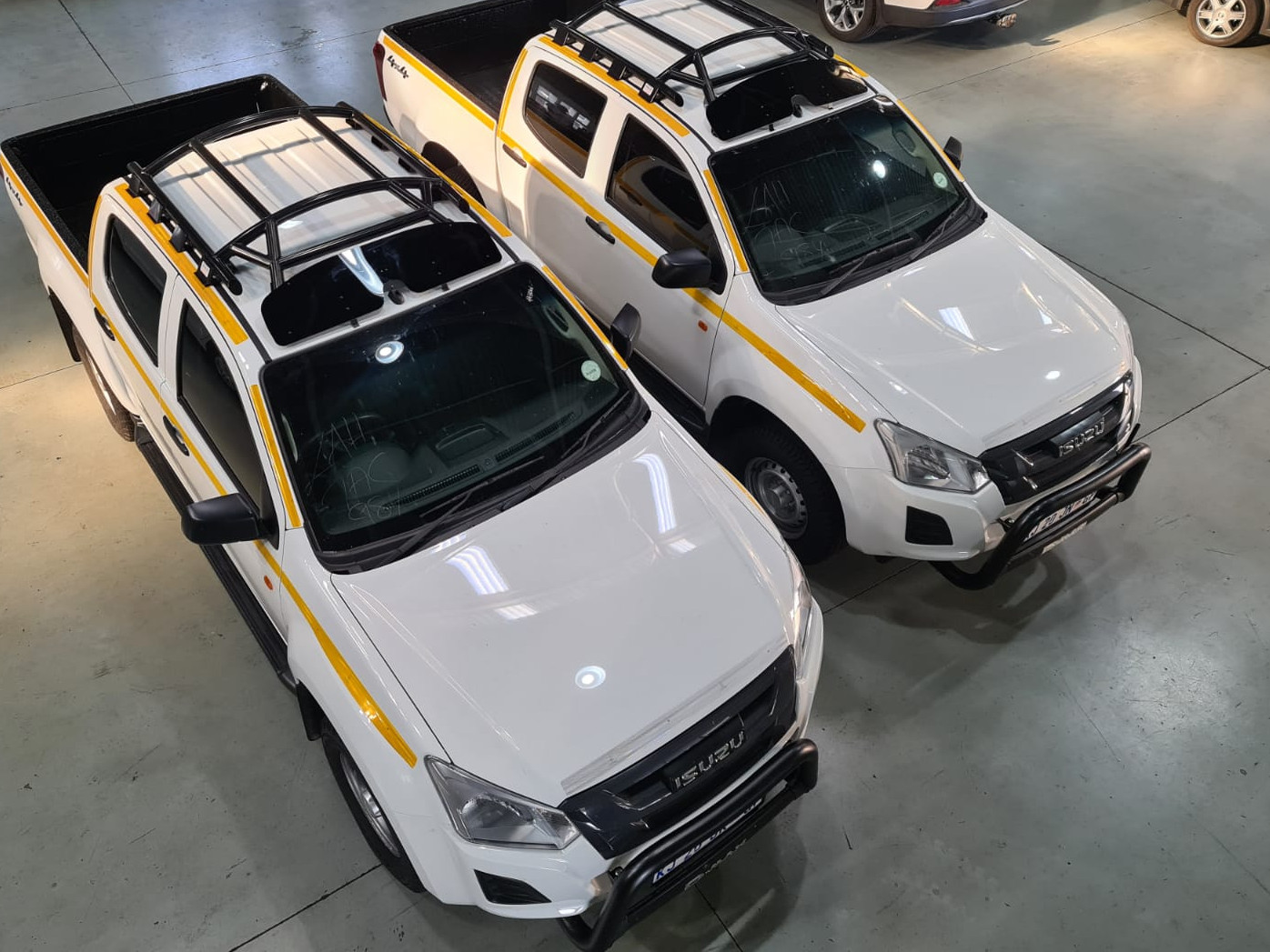
HALO is a patented rollover protection system, specifically developed for light-duty fleet vehicles, certified under ISO 3471:2008 and FMVSS 216. It is designed to preserve the occupant's survival space in a rollover event by transferring the load to the vehicle's structure rather than the roof panel.
At Safety Engineering International, we have installed HALO on D-MAX platforms in international mining operations. We offer high-end protection equipment with proven performance. We are ready to equip this new pickup model, which will be introduced to Mexico soon. We provide complete fleet outfitting services and shipping throughout Mexico.
Are you considering a D-MAX or another pickup for your next fleet renewal? Request a quote: info@safetyei.com · +1 805-895-5192
Frequently Asked Questions
What is a rollover protection system (ROPS)? It is a structure designed and tested to maintain a survival space inside the cab when the vehicle rolls over and comes to rest on its roof. Unlike a decorative roll bar or cargo basket, a certified ROPS is validated under load according to specific standards.
Does a new pickup truck come with rollover protection? No. Standard pickups meet regulatory roof strength thresholds, but they do not include a ROPS. Rollover protection is optional equipment.
Does installing a ROPS affect the vehicle warranty? A system installed with a documented procedure and secured to the vehicle structure should not void the warranty. Always request the technical documentation from the supplier.
Can a rollover protection system be installed on a fleet that is already in operation? Yes, although it requires taking some vehicles out of service. Therefore, it is more economical to specify it in the purchase order.


Comments